How to get a job in the UK in 2026: a step-by-step guide
Updated 26 October 2026 · 9 min read
To get a job in the UK, you need four things in place: the right to work here, a clear idea of the job you’re aiming for, a UK-format CV, and a steady routine of applying through the right channels. After that it’s a series of stages: application, interview, offer, and pre-employment checks such as references and proof of your right to work.
This guide takes you through how to get a job in the UK step by step, whether you’ve just finished school, you’re changing career, or you’ve recently moved here. Each step explains what UK employers expect and what to do next.
The steps at a glance
- Check you have the right to work in the UK, and apply for a National Insurance number if you don’t have one.
- Choose one or two types of job to aim for, and check whether they need a licence, card or registration.
- Write a UK-format CV and a short cover letter you can tailor for each job.
- Search in the places UK employers actually advertise: official job sites, job boards, agencies and employers’ own websites.
- Apply to jobs you genuinely fit, a few each week, and keep track of them.
- Prepare for interviews with real examples from your experience.
- Accept an offer, provide references and documents, and read your written terms before you start.
Step 1: Check your right to work
Every UK employer has to check that you’re allowed to work here before you start. British and Irish citizens usually show a passport. Most other people prove their status online and give the employer a share code, using GOV.UK’s prove your right to work service. If you have settled or pre-settled status, or a visa that allows work, you can apply for most jobs straight away.
If you’re not sure whether you need a visa, GOV.UK’s check if you need a UK visa tool will tell you. If you need sponsorship, you can only be hired through the Skilled Worker visa by an employer with a sponsor licence, who gives you a certificate of sponsorship. The salary and job rules change, so always check the current ones on GOV.UK rather than relying on old advice. Our guide on how to find visa sponsorship jobs in the UK explains how to find employers who can sponsor you.
National Insurance number
You need a National Insurance number so your tax and contributions are recorded correctly. If you don’t have one, you can apply for a National Insurance number on GOV.UK. You can start work before it arrives as long as you can prove your right to work.
Step 2: Decide which jobs to aim for
“Any job” is the hardest job to get. Employers shortlist people whose CV clearly fits the vacancy, so pick one or two job types and build your search around them. Look at a handful of adverts for each and note the skills, qualifications and words they keep repeating. That list becomes your guide for the CV in the next step.
Some UK jobs can’t be done without a specific licence, card or registration. For example:
- security work needs an SIA licence
- most building sites ask for a CSCS card
- work with children or vulnerable adults usually needs a DBS check, which the employer normally arranges
- doctors need GMC registration and nurses need NMC registration
- teachers in state schools in England usually need QTS
- professional HGV drivers need a Driver CPC as well as the right licence
If you studied abroad, UK ENIC can issue a statement comparing your qualifications with UK ones, which helps employers understand them. For regulated professions, the regulator decides what you need, so check with it directly before you apply.
Step 3: Get your CV and cover letter UK-ready
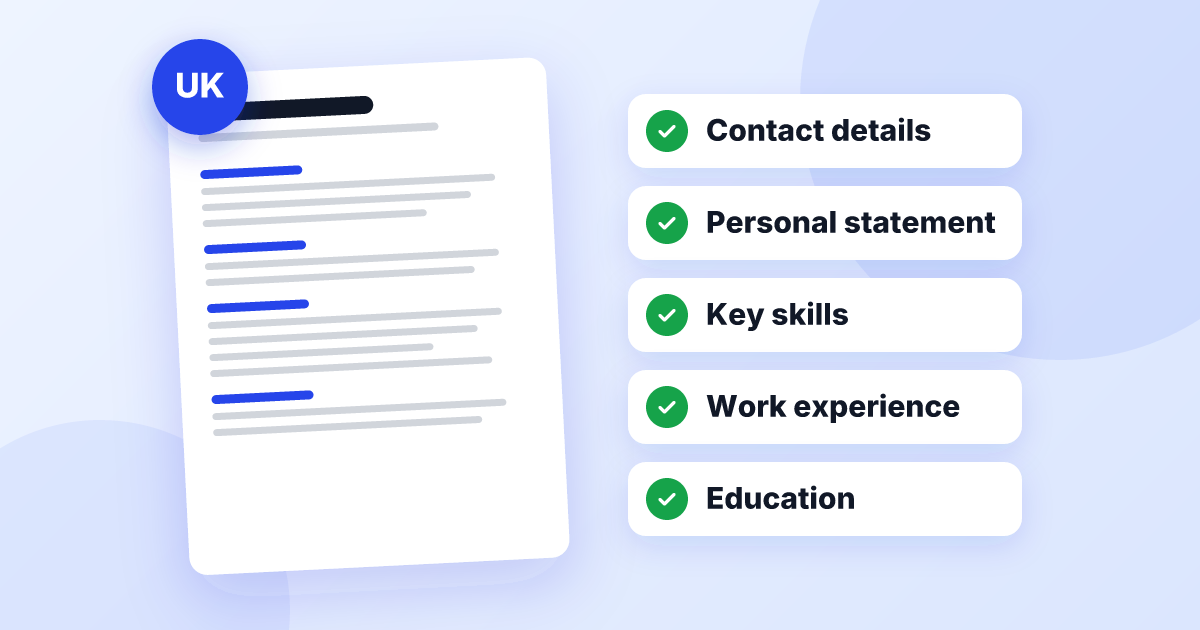
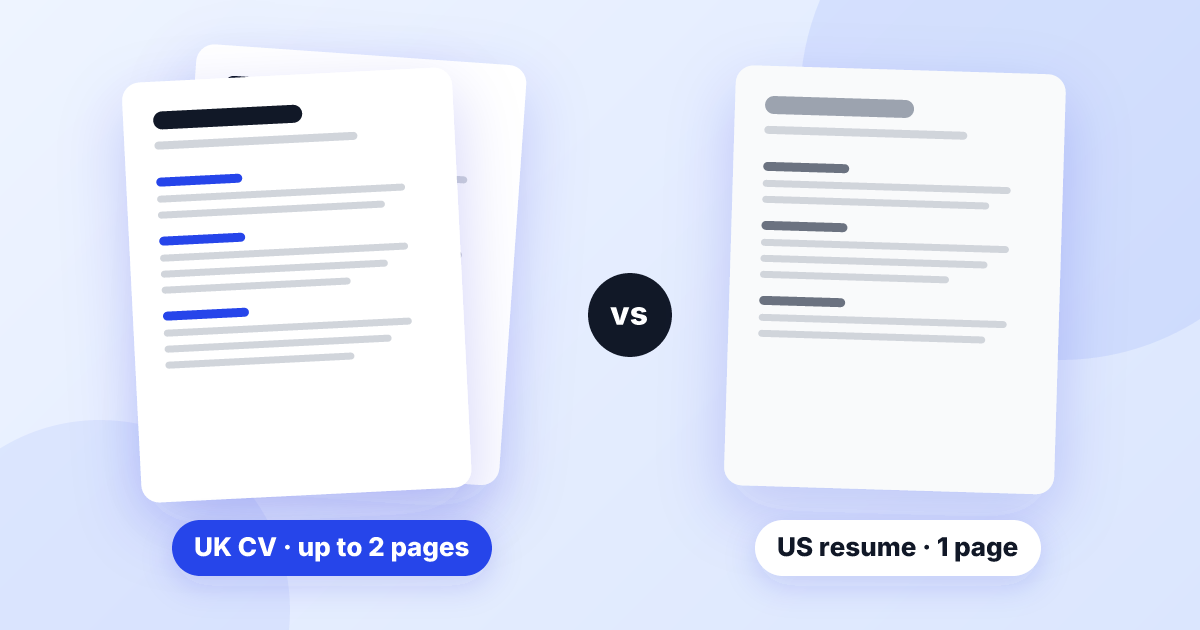
Your CV is what gets you to interview, so it’s worth getting right before you send a single application. A UK CV is up to two sides of A4, starts with a short personal statement, puts your most recent job first and leaves out your photo, age and other personal details. Our guide on how to write a UK CV covers each section, and the full UK CV example shows one finished.
The biggest mistake when job hunting is a CV that describes your past rather than the job you want next. Make the top of the page point at your target job:
Weak
Strong
Most applications also need a short letter or supporting statement. Our guide on how to write a cover letter has examples to follow.
Step 4: Where to find jobs in the UK
No single website has every vacancy, so use a mix. These are the main places UK employers advertise:
- Find a Job, the government’s free job search service, which your Jobcentre work coach can also help with.
- NHS Jobs for clinical and non-clinical roles in the NHS, from porters and administrators to nurses.
- Civil Service Jobs for government departments and agencies. Our guide to civil service jobs explains how their applications and STAR answers work.
- Your local council’s website, plus schools, colleges, universities and housing associations, which often advertise on their own sites.
- The large job boards and LinkedIn, where you can set up alerts for your job title and area.
- Recruitment agencies, especially for office, warehouse, driving, care, hospitality and temporary work.
- Employers’ own careers pages, since some vacancies only appear there.
- People you know. Tell friends, family, former colleagues and community groups what you’re looking for. Many jobs are filled through recommendations.
Watch out for job scams
Step 5: Applying for jobs
Applying for jobs works best as a steady routine. Ten careful applications to jobs you fit will usually do more than fifty rushed ones, because each tailored application is far more likely to reach the shortlist.
- Read the whole advert and the job description, especially the “essential” and “desirable” criteria. If you meet most of the essential ones, apply.
- Tailor your CV so its first half matches the advert’s main requirements, in the advert’s own words where they’re true for you.
- Answer application form questions fully. Public sector and larger employers often use forms instead of CVs, and they score your answers against the criteria.
- Apply early. Some employers close an advert as soon as they have enough applicants.
- Keep a simple list of each job, the date you applied, the closing date and the contact, so you can follow up and recognise the job when someone calls.
Not hearing back is normal, and many employers only reply to shortlisted candidates. If a week or two has passed since the closing date, a short, polite email asking about the timetable is fine.
Step 6: Interviews
Interviews in the UK may be by phone, video or in person, and some employers add a test, a presentation or an assessment centre with group tasks. Most use competency-based questions that start “Tell me about a time when…”. The easiest way to answer them is the STAR method: the Situation, the Task, the Action you took and the Result.
Situation: I was working on the tills in a busy supermarket on a Saturday, and a customer was angry because an offer hadn’t come off his shopping.
Task: I needed to sort out the problem without holding up the rest of the queue.
Action: I apologised, checked the shelf label with a colleague by radio, and when it turned out the label was out of date I explained that and offered to call the supervisor. She agreed to honour the price, and I let the shift manager know so the label was changed.
Result: the customer left happy, the queue kept moving, and the wrong labels were removed from the aisle that afternoon.
Prepare four or five stories like this before any interview, covering teamwork, a problem you solved, a time you were under pressure and something you’re proud of. Also prepare two questions to ask at the end, such as what a typical week looks like or how the role will be trained.
Step 7: The offer and pre-employment checks
Offers are often made by phone first and then in writing. Many are “conditional”, which means they depend on checks being completed. Expect some of these:
- references from recent employers, or from a teacher or volunteer manager for a first job
- your right-to-work check, done before your first day
- a DBS check for work with children or vulnerable adults
- proof of qualifications, licences or professional registration where the job needs them
Before you start, read the written statement of your terms: pay, hours, holiday, probation period and notice period. If you’re unsure whether the pay is legal, the current National Minimum Wage and National Living Wage rates are on GOV.UK. They change, usually every April. If you’re still employed elsewhere, resign only once you have the offer in writing.
Extra tips if you’re new to the UK
Moving here brings a few extra hurdles, but each one has a practical answer:
- Make your CV look British. Switch to UK spelling, dates and phone number, and drop the photo and personal details. Our UK CV vs US resume guide lists the changes.
- Explain overseas employers in a few words, such as “a 300-bed private hospital in Lagos”, so a UK reader understands the size of your role.
- Get a UK reference. Temporary, agency or volunteering work gives you a UK referee and recent UK experience to put on your CV, which can make later applications easier.
- Don’t undersell yourself. Starting below your level is sometimes the quickest way in, but keep applying for the jobs you’re qualified for at the same time.
- Ask for local help. Jobcentre Plus, your council and local community organisations often run free job clubs, CV help and English classes.
If your CV is the part holding you back, you can get your CV ready for UK employers with UK CV Fix. Upload your current CV, wherever it was written, or answer a few questions, and we’ll turn it into a UK-format CV tailored to the job you want, with a matching cover letter.
Knowing how to get a job in the UK mostly comes down to doing the basics well and keeping going: sort out your right to work, aim at specific jobs, send a CV that fits each one, and prepare real examples for interview. If you’re applying for your first job, our guide on writing a CV with no work experience will help you get started.
Frequently asked questions
How long does it take to get a job in the UK?
It varies a lot by job, location and time of year. Many employers take a few weeks from the closing date to interviews, and public sector jobs often take longer because of their checks. Applying steadily every week, rather than in bursts, is what keeps offers coming.
Can I start work before I have a National Insurance number?
Yes, if you can prove your right to work in the UK. You can apply for a National Insurance number on GOV.UK and give it to your employer once it arrives.
Do I need a visa to work in the UK?
British and Irish citizens do not. Most other people need immigration status that allows work, such as settled or pre-settled status, or a visa like the Graduate or Skilled Worker visa. GOV.UK has a tool that tells you which visa you might need.
Should I use a recruitment agency to find a job?
Agencies are useful, especially for office, warehouse, care, hospitality and temporary work, but use them alongside your own applications rather than instead of them. Genuine agencies make their money from employers, so be wary of anyone who asks you to pay for a job.
How do I get a job in the UK with no UK experience?
Show employers that your skills carry over: describe overseas employers clearly, use British job titles where they match, and get a UK reference if you can through volunteering, temporary or agency work. A UK-format CV and a line about your right to work also help.